Please Login or Register

Source:

Title: Bill Snyder talks Big 12 offense

Submitted By: curtis_kitchen
June 15, 2009
more from this member
rate this user

Bill Snyder talks Big 12 offense

KANSAS CITY, Kan. – Football offenses around the Big 12 are better now than they were even four or five years ago.  How’s that for stating the obvious?


How much better?  That’s the hard part, especially if you’re just getting back in the swing of things, like, say, Bill Snyder at Kansas State.


Yard totals that once led the conference and were considered freakish in nature wouldn’t be better than fifth or sixth by today’s standards. 


For example: in 2003, Oklahoma led the conference in scoring at 42.9 points per game, with 78 touchdowns.  Texas Tech averaged the most yards per game with 582.8 – a number that, back then, left most folks shaking their heads in amazement. Tech was the only Big 12 program averaging more than 500 yards per game.  Kansas State, led by Ell Roberson and Darren Sproles, was second – 140 yards behind Tech.


Last season, the Sooners again led the conference in scoring, but at 51.1 ppg, with 99 touchdowns.  OU’s sick ’03 average would have ranked third, stuck in a group with three other schools that also averaged better than 40 points per game.


The Sooners led in total offense as well last year, getting 547.9 yards, almost 40 yards less than Tech’s ’03 mark.  Where the dramatic rise in production across the board is noticeable, however, is immediately after OU.  K-State’s ’03 total, second in the conference then, would have ranked only seventh a year ago.


Yards per play are also significantly improved.  Four schools (Oklahoma, Texas Tech, Missouri and Oklahoma State) averaged 6.9 yards per play or better.  Six more netted 5.5 or more per play.  Only Colorado was below five yards per play, at 4.5. 


Compared to the others, that number sounds extremely low, but think about it – by that number, the worst team in the league was nearly halfway to a first down each play (excluding penalties of course).


Subsequently, the Big 12 once boasted some of the best defenses in the nation.  That’s not the case anymore.  Where teams like Oklahoma, Texas and Kansas State were once defensive juggernauts (and rightfully so) at one time, only one, the Longhorns, finished in the top 51 nationally in yards allowed in 2008. 


They were 51st, while the Big 12 sported three teams in the bottom eight of the FBS ranks (Iowa State – 112th; Texas A&M – 114th; K-State – 117th).


So, which is it?  Offenses are that good, or defenses are that bad?   The answer is both as those who paid attention saw that Texas, Oklahoma (and Missouri to a lesser degree) held their own, while others, like K-State and Iowa State, had a better shot at laying down and tripping a ball carrier than tackling.


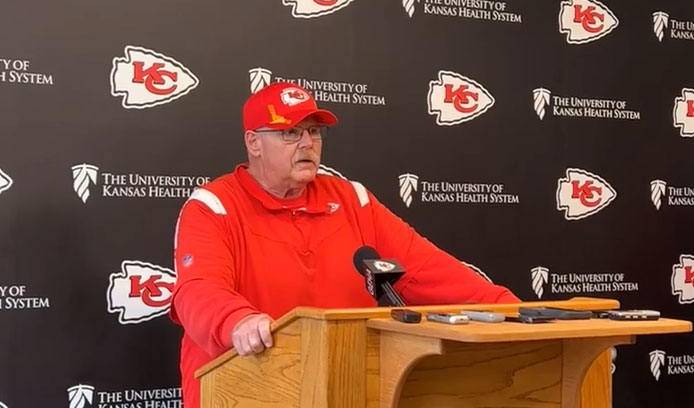
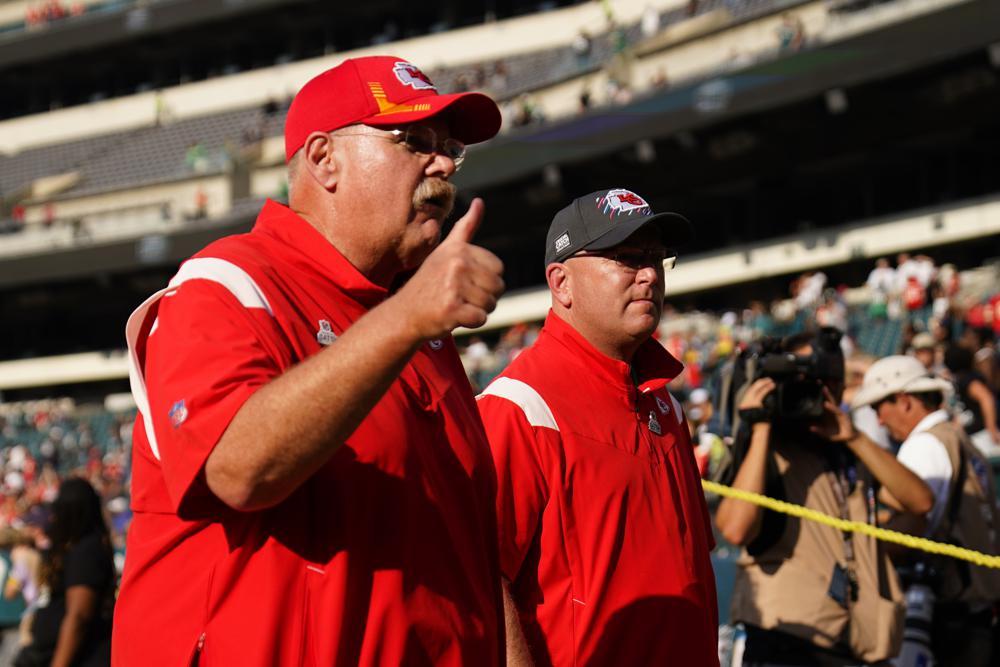
Bill Snyder, back as K-State head coach after resigning his post after the 2005 season, said he isn’t sure which side of the ball is telling more truth in terms of statistics.


“The question has to be whether [the Big 12] has gotten that much better on offense or that much worse on defense,” Snyder said.  “I don’t know if I have the real answer to that problem, but the thought that  the numbers offensively across the nation have gone up dramatically – if you were to look at the number of times 70 points or more were scored in a ballgame, that number, I would suggest, is probably four or five times higher than it would have been three years ago, or even two years ago.”


The increased production, Snyder believes, is wholly by design. 


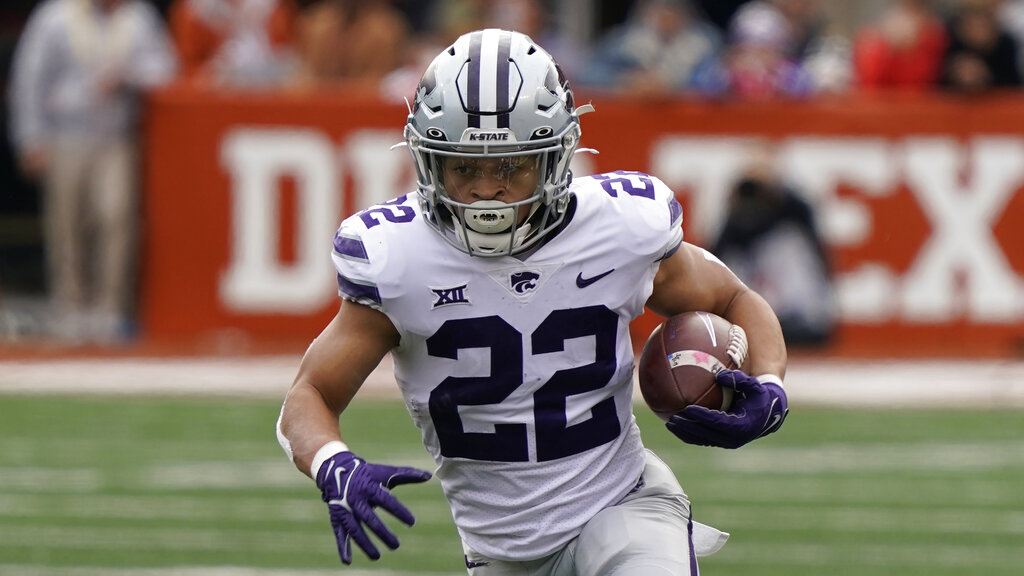
K-State-s revolutionary implementation of the quarterback position as a running weapon in a spread formation (see Michael Bishop) sparked a wildfire of imitation throughout college football.  It is a fire that still burns today.


However, the flip side of the coin is that the scheme was so good that it seems virtually everybody runs a version of the dual-threat spread now, which means many more schools recruiting the same types of players.


Schools in the Big 12 are finding them, or at least have found ways to make their version of the dual-threat spread work at a high level.


Chase Daniel sailed under the recruiting radar but flourished at Missouri.  Todd Reesing wouldn’t pass anybody’s eyeball-test in terms of looking like a football player but his speed and knack for making a big throw has elevated Kansas offensively. 


Mike Leach continues to groom QB after QB at Tech, and even Baylor, with freshman dual-threat stud Robert Griffin behind center, found an offensive identity a season ago. 


“Now,” Snyder said, “there’s a high premium.  At that time, everybody wanted drop-back guys. We had access to a lot of dual-threat type talent.  Today, everybody wants that type of quarterback.”


The marriage between the spread offense and dual-threat quarterback is a strong one, but not so strong that Snyder thinks defenses won’t catch up to it eventually.


“How much wishbone do you see right now,” Snyder said.  “Eventually, one side catches up with the other.  It does become cyclical because you only have so many variables with 11 offensive players on the field.


“There is only so much that you can do.”


That might be true.  However, while the spread rules college football, it means college coaches have to budget their rosters as such.


The tempting piece for coaches is to load up a roster full of offensive skill positions players, especially receivers and quarterbacks.  Of course, the problem with that is the 85-scholarship limit because the more offense you add, the less room for defense.


Faced with building his first team since the spring and summer of 2005, Snyder said defensive depth is one of the main concerns in trying to prepare a team for what it will encounter.


“Defensively, now, say you want to play that four-man front,” Snyder said.  “Then, you want to move to the three man.  That adds an additional linebacker or defensive secondary player.


“So, what that is saying is you have to recruit four down linemen, four linebackers and five secondary players.  Now, you’re talking about recruiting 13 defensive positions as well.


“Throw in the specialists, and that means you need 26 frontline players – first-team offense and first-team defense.”


Some quick math says depth quickly could quickly become a problem.


“You’re looking at two and a half to three players per position,” Snyder said.


Many coaches get their programs in a bind because they fall victim to the football version of keeping up with the Joneses.  It’s easy to do when your rival is putting up big numbers, or when teams like Oklahoma (which averaged 51-plus points per game last year, remember) routinely enter the BCS Championship mix.


Coaches, remember: more offense means less defense.


Even as programs continue to adapt their teams to the high-flying offenses in use today, Snyder believes the tug-of-war between the two sides of the ball will continue.


It could be more teams going back to power football like Paul Johnson has brought to Georgia Tech.  It could be a full evolution of the spread to having multiple quarterbacks on the field at the same time as passers. 


“All of the above [could happen],” Snyder said.  “I really believe that.  I think you’ll see some teams, and some already are, back into the veer.  I think you’ll see, if their personnel allows, teams gravitate back toward a running game.”


Why run when the pass is so sexy?  The run game exploits size, or lack thereof. 


A very small percentage of teams are able to hoard the big AND fast players (see traditional powerhouses).  Most programs, including a large chunk of Top 25 teams, have to recruit to one asset or the other.  Since most offenses have chosen to spread things out, it has meant most defenses have shrunk, literally, in an attempt to remain quick enough to tackle in the open field.


“Defensively, when you’ve gone out to recruit, you’ve recruited smaller, faster linebackers, more perimeter people,” Snyder said.  “So, consequently, they are geared to line up and play against the pass a little bit better.”


Smaller and faster is something K-State fans have had their fill of for the time being.  The past three seasons saw too many undersized down linemen, linebackers who, when in the right position, bounced off of running backs and defensive backs who simply got beat to passes in the secondary.


Small and somewhat quick didn’t work, especially when strong wasn’t part of the equation.


Snyder knows that.  He saw it as a spectator. 


It is why his team has spent the majority of its time in strength and conditioning programs this offseason – something that inexplicably was sorely lacking during Ron Prince’s tenure. 


Improved strength isn’t going to mean a return to nine or 10 wins immediately for the Wildcats.  But, the ability to make two or three more tackles per drive, which in turn should shore up a Wildcats unit that struggled on a good day, could mean the difference between a return to a bowl game or people questioning whether a legend’s return is enough to cut it.


Send your comments to curtiskitchen@810whb.com.